Safety compliance
Protective equipment rules are written down and quietly ignored on the floor.
The system checks helmets, vests and gloves in the feed and alerts on a violation.
Manufacturing Construction
Violations usually surface late, in reports and complaints. Computer vision reads the camera feed as it happens: it checks protective equipment, matches operations against the procedure and raises alerts.
Get in touchProtective equipment rules are written down and quietly ignored on the floor.
The system checks helmets, vests and gloves in the feed and alerts on a violation.
Manufacturing ConstructionWhether an operation followed the checklist is only known when something goes wrong.
Each step is matched against the written procedure, with the clip attached as evidence.
Operations AuditManual inspection catches a sample, and the rest reaches the customer.
Every unit on the line is checked, and the borderline ones go to a human.
Quality control Production lineDecisions about layout and staffing are made on a feeling about the traffic.
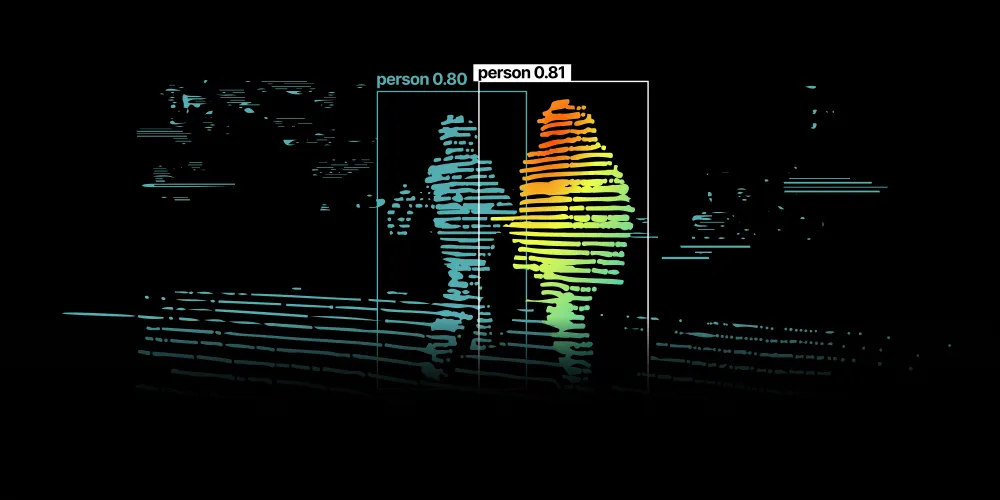
Counting and dwell-time analytics without collecting anyone personal data.
Retail AnalyticsTypical first-year effect
Not a sample, the whole feed
On a standard camera stream

To launch video analytics we need a feed from the cameras, an agreed list of what counts as a violation, and the right amount of server capacity behind it.
Documents and conversations never leave your perimeter. That keeps the solution compatible with GDPR, HIPAA and internal security policies.
We deploy on your servers or in your cloud, whichever your data policy requires. We size the hardware for the load or fit into what you already run.
Cloud LLMs or open-source models inside your perimeter. We test candidates on your own scenarios during the first stage and pick by result, not by hype.
We agree on which violations matter, what counts as one and who acts when it is caught.
We check angles, lighting and stream quality, and say what has to be added or moved.
We train and validate the models on your own recordings, not on a generic dataset.
We deploy on your servers or in the cloud, tune the thresholds and cut the false alarms.

AI video processing
Dermadex
Offline advertising analytics
Usually not. Most existing systems are good enough, and we tell you after looking at the feed. Sometimes an angle has to change or lighting has to be added for a specific scenario, and that is cheaper than replacing the hardware.
It depends on the scenario and the quality of the feed, so we quote accuracy after training on your own footage rather than promising a number upfront. Where a miss is expensive we tune the thresholds towards catching more and let a person filter the false positives.
It does not have to. Counting and compliance scenarios work on anonymous detections, without identifying anyone, which keeps them clear of most privacy constraints. If your scenario genuinely needs identification, that is a separate design decision with its own legal review.
On your servers, at the edge next to the cameras, or in the cloud. Video is heavy, so for large installations processing close to the source is usually both cheaper and faster than shipping every frame elsewhere.
Yes, though it usually costs more: a self-hosted model needs a GPU server, rented or bought. So while the task involves no sensitive data, most teams start on cloud LLMs. When the data is sensitive, we deploy an open-source model inside your perimeter: the model, the knowledge base and the logs never leave the company, which is what GDPR and internal security reviews ask for. We do it end to end, including the servers, the deployment and the access rules.
Business processes change and the solution grows with them: we refresh the knowledge base as your policies and products change, extend the scenarios to neighbouring tasks, and move to stronger models as they ship. You can run this yourself or hand it to us as support.

The Blockchain Wall Street Actually Uses

This is the story of how Unistory experts developed a custom video hosting platform and automated the transcription of lectures.